RAG(检索增强生成)RAG (Retrieval-Augmented Generation)
RAG (Retrieval-Augmented Generation)
让模型在回答前先检索外部资料,把找到的原文片段放进上下文,再据此作答。Let the model retrieve external material first, put the found passages into context, and answer from them.
RAG 把参数化记忆(模型权重)与非参数化记忆(外部文档索引)组合起来:先用检索器找相关片段,再让生成模型基于片段写答案。
它的价值不只是多知道一些事实,还在于答案可以附出处、资料可以更新而不用重训模型。
RAG combines parametric memory (model weights) with non-parametric memory (an external document index): a retriever finds relevant passages, then a generator answers from them.
Its value is not only more facts: answers can carry sources, and the corpus can be updated without retraining the model.
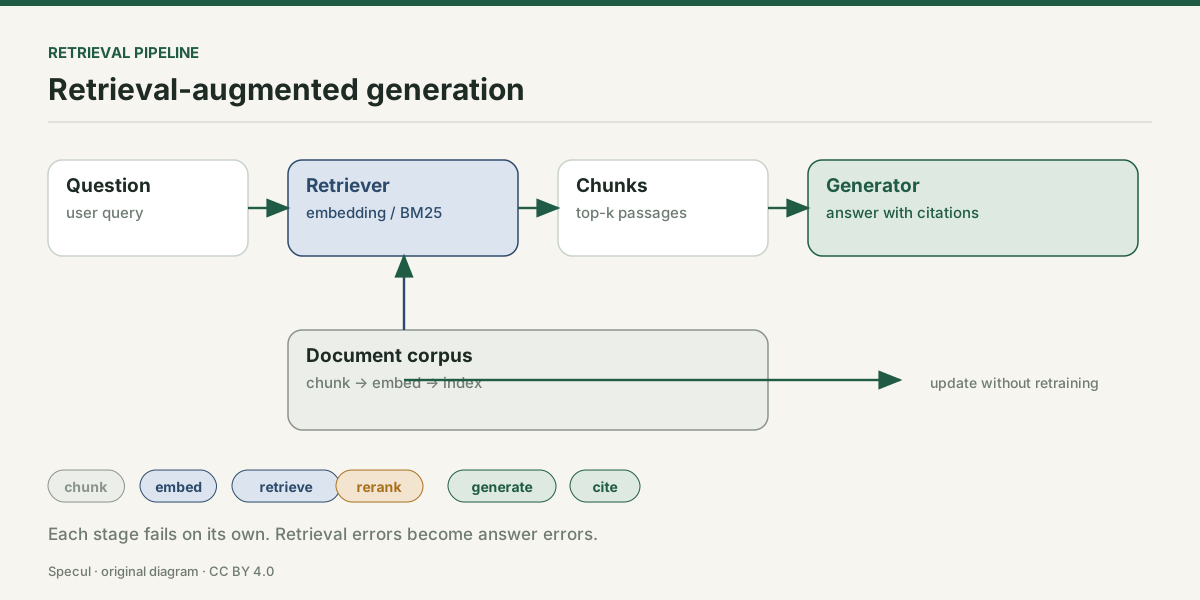
遇到私有资料、时效性强的问题,微调不是唯一答案;RAG 往往更快、更可追溯,但检索错、分块错会直接传导到答案。For private or time-sensitive knowledge, fine-tuning is not the only option. RAG is often faster and traceable, but retrieval and chunking errors propagate straight into the answer.
检索增强生成 · 检索增强 · RAG 检索
回到名词地图看第3站的其他 54 个词 →Back to the map: the other 54 terms in station 3 →