记忆Memory
Memory
让 Agent 跨对话记住事,不用每次都重新交代背景。Let an agent remember things across conversations instead of restating the background every time.
把历史信息持久化保存,让后续会话能取回使用。
两种做法:存在程序里(可控),或存在模型外部的存储里(灵活但要管权限)。
Persisting historical information so later sessions can retrieve it.
Two approaches: store it in the program (controllable), or in external storage the model can reach (flexible, but then permissions matter).
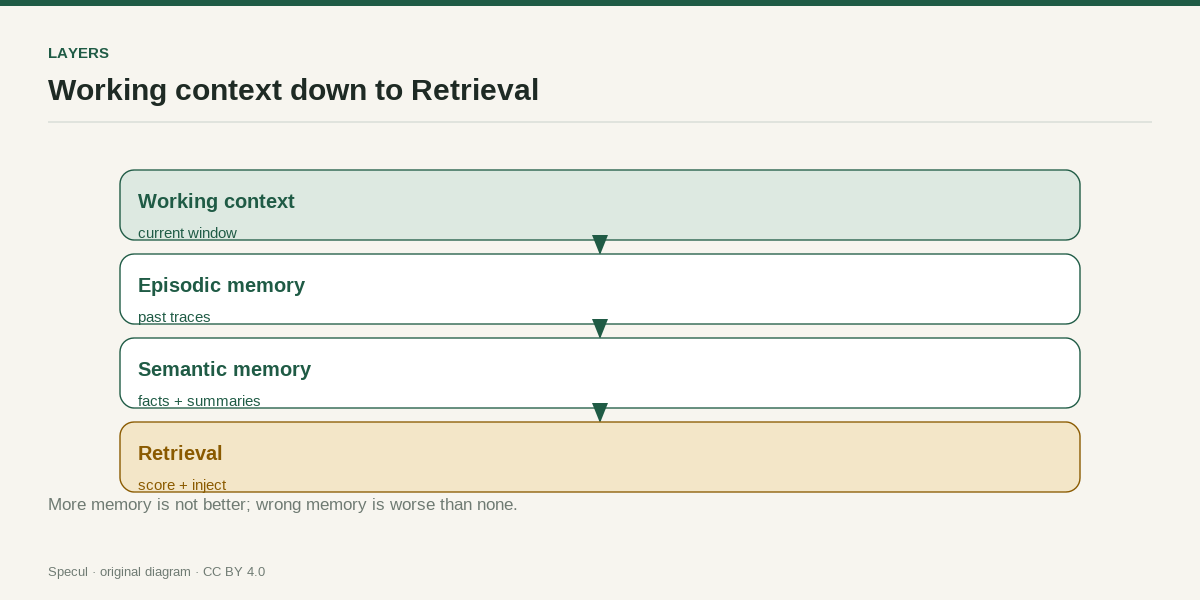
「AI 每次都忘事」是使用中最常见的抱怨,答案就是要有记忆层。"The AI forgets everything every time" is the most common complaint in use, and the answer is a memory layer.
知识图谱记忆 serverKnowledge-graph memory server ↗
回到名词地图看第3段的其他 75 个词 →Back to the map: the other 75 terms in stage 3 →
- 知识图谱记忆 serverKnowledge-graph memory server ↗
别停在定义:去任务手册看按什么顺序做、验收什么;或者按你手头的任务,筛 3 个工具候选。Don’t stop at the definition: use the task handbook for the order and checks, or filter three tool candidates for the job at hand.
任务手册 →Task handbooks → · 按任务筛 3 个候选 →Filter three candidates →