子词分词Subword Tokenization
Subword Tokenization
把词切成更小的碎片,让模型遇到没见过的词也能拼出来。Cuts words into smaller fragments so a model can still assemble words it has never seen.
最常见的方案是 BPE:从字符出发,按出现频率反复合并相邻片段,得到一套子词。
「未登录词」问题由此缓解——整词不在词表里,它的碎片多半在。
The dominant scheme is BPE: start from characters, repeatedly merge the most frequent adjacent pairs into a subword inventory.
It eases the out-of-vocabulary problem — a whole word may miss the vocabulary, but its fragments usually are in it.
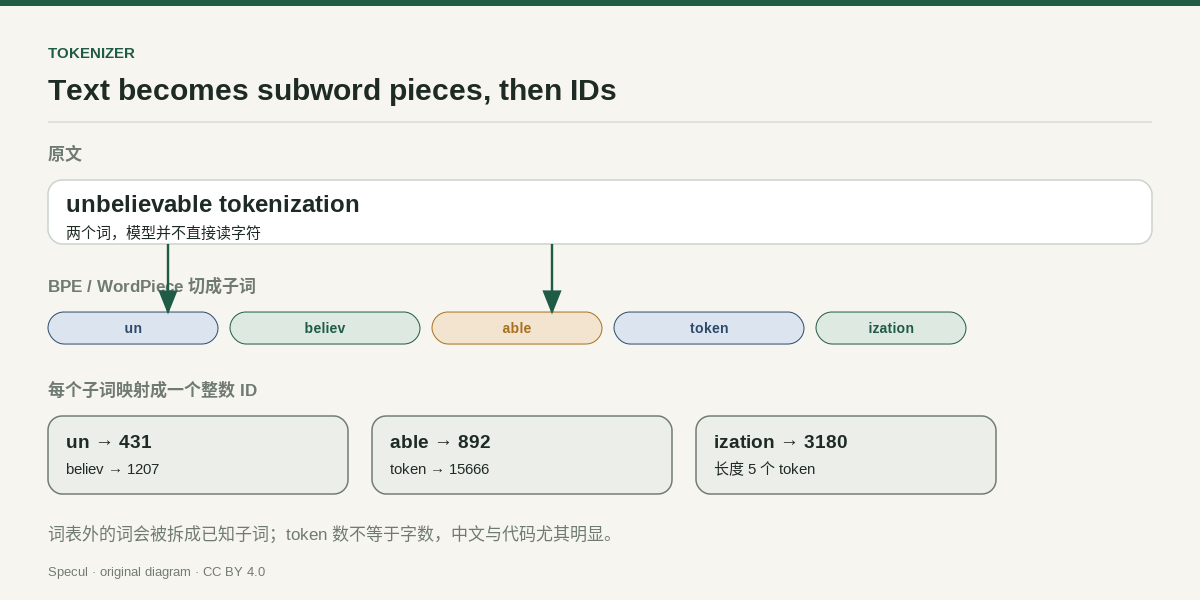
你看到模型把生僻词拆成奇怪片段,不是「不认识」,是子词分词在工作。词表大小与合并规则共同决定模型对中文、代码的友好度。When a model splits a rare word into odd fragments, it is not "failing to recognize" it — subword tokenization is at work. Vocabulary size and merge rules together decide how friendly a model is to Chinese and code.
回到名词地图看第4段的其他 60 个词 →Back to the map: the other 60 terms in stage 4 →
别停在定义:去任务手册看按什么顺序做、验收什么;或者按你手头的任务,筛 3 个工具候选。Don’t stop at the definition: use the task handbook for the order and checks, or filter three tool candidates for the job at hand.
任务手册 →Task handbooks → · 按任务筛 3 个候选 →Filter three candidates →