Subword Tokenization
Subword Tokenization
What problem it solves
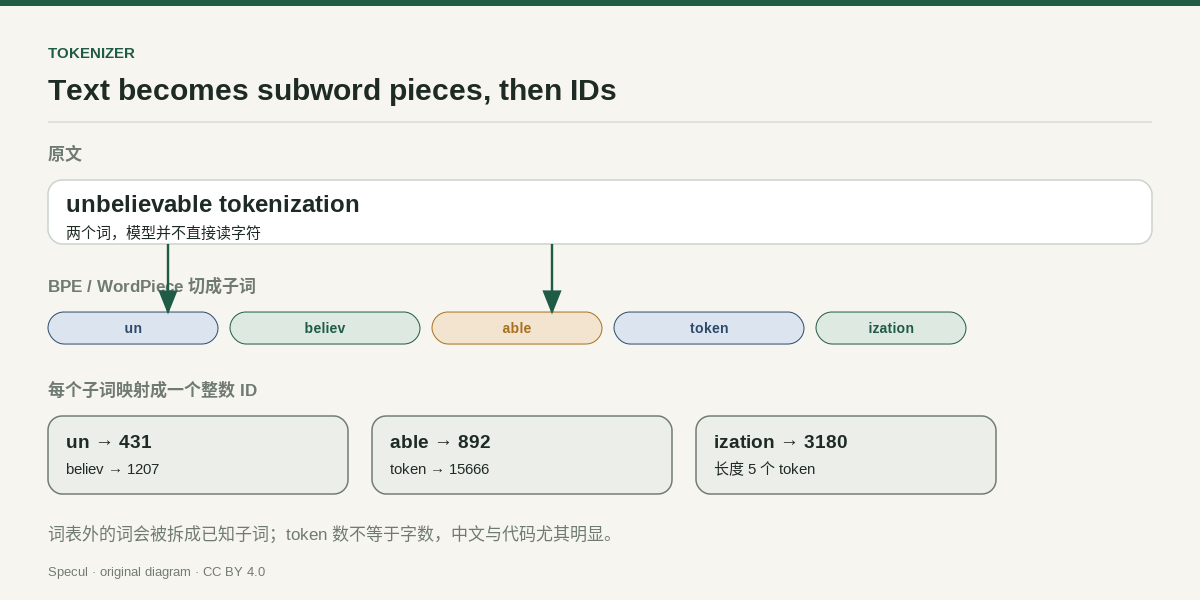
Cuts words into smaller fragments so a model can still assemble words it has never seen.
What it is
The dominant scheme is BPE: start from characters, repeatedly merge the most frequent adjacent pairs into a subword inventory.
It eases the out-of-vocabulary problem — a whole word may miss the vocabulary, but its fragments usually are in it.
Why it matters
When a model splits a rare word into odd fragments, it is not "failing to recognize" it — subword tokenization is at work. Vocabulary size and merge rules together decide how friendly a model is to Chinese and code.
Related guides
What you can do now
Models atlas: which quantisations exist and which tier fits your VRAM ↗
Sources
Use this term in a task
Don’t stop at the definition: use the task handbook for the order and checks, or filter three tool candidates for the job at hand.