RAG (Retrieval-Augmented Generation)
RAG (Retrieval-Augmented Generation)
What problem it solves
Let the model retrieve external material first, put the found passages into context, and answer from them.
What it is
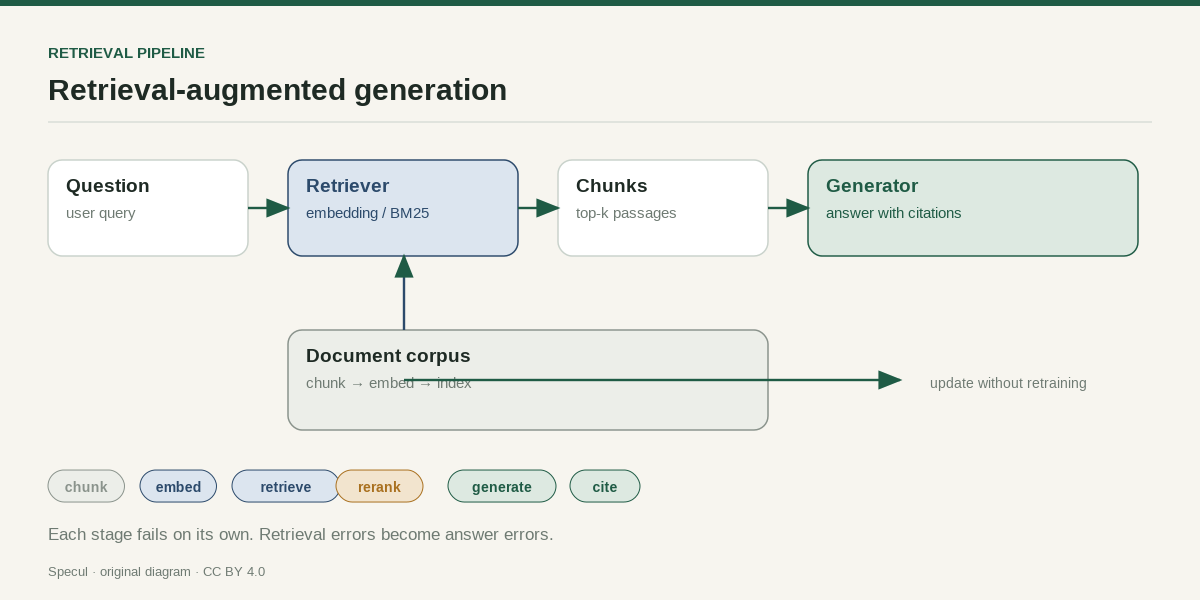
RAG combines parametric memory (model weights) with non-parametric memory (an external document index): a retriever finds relevant passages, then a generator answers from them.
Its value is not only more facts: answers can carry sources, and the corpus can be updated without retraining the model.
Why it matters
For private or time-sensitive knowledge, fine-tuning is not the only option. RAG is often faster and traceable, but retrieval and chunking errors propagate straight into the answer.
Chinese aliases
Related guides
What you can do now
Models atlas: which quantisations exist and which tier fits your VRAM ↗
Sources
Use this term in a task
Don’t stop at the definition: use the task handbook for the order and checks, or filter three tool candidates for the job at hand.