微调Fine-tuning
Fine-tuning
拿一个已有的模型,用你自己的数据继续训练,让它更懂你的领域。Teach an existing model a specific task or style, rather than describing the task in the prompt.
在已有模型的权重基础上继续训练,通常用较少的数据和时间。
它和「提示词」是两种不同手段:提示词改行为,微调改能力倾向。
Further training of an already-trained model on task-specific data, changing its weights rather than its instructions.
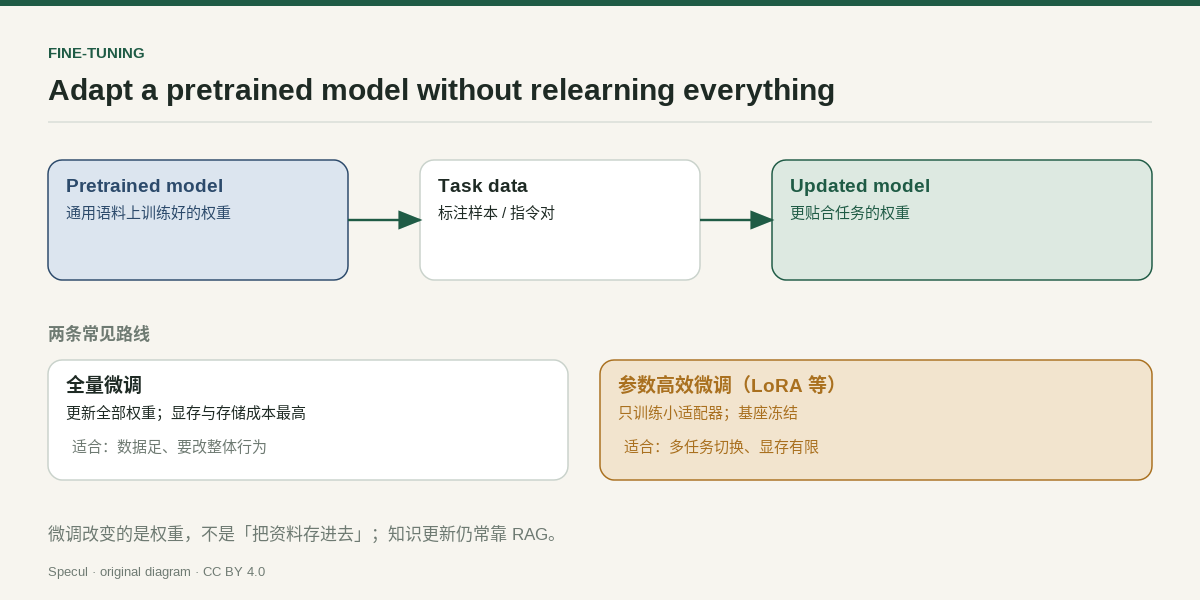
多数场景你不需要微调。先用提示词和 RAG,不够再考虑微调。两者成本差一个量级。It can beat prompting for a narrow task, but it costs more and is harder to maintain. Prompting first is usually the right order.
回到名词地图看第2段的其他 43 个词 →Back to the map: the other 43 terms in stage 2 →
别停在定义:去任务手册看按什么顺序做、验收什么;或者按你手头的任务,筛 3 个工具候选。Don’t stop at the definition: use the task handbook for the order and checks, or filter three tool candidates for the job at hand.
任务手册 →Task handbooks → · 按任务筛 3 个候选 →Filter three candidates →