工具调用Tool Calling / Function Calling
Tool Calling / Function Calling
模型自己决定「我要查一下数据库」,然后真的去调那个程序。Let the model actually do things — search, run code, edit files — rather than only describe them.
模型输出一个结构化的调用意图,由你的程序执行后把结果喂回去。
模型本身不执行任何东西,它只是输出「要调哪个函数、传什么参数」。
A mechanism where the model emits a structured request for a function, the system runs it, and the result goes back into the conversation.
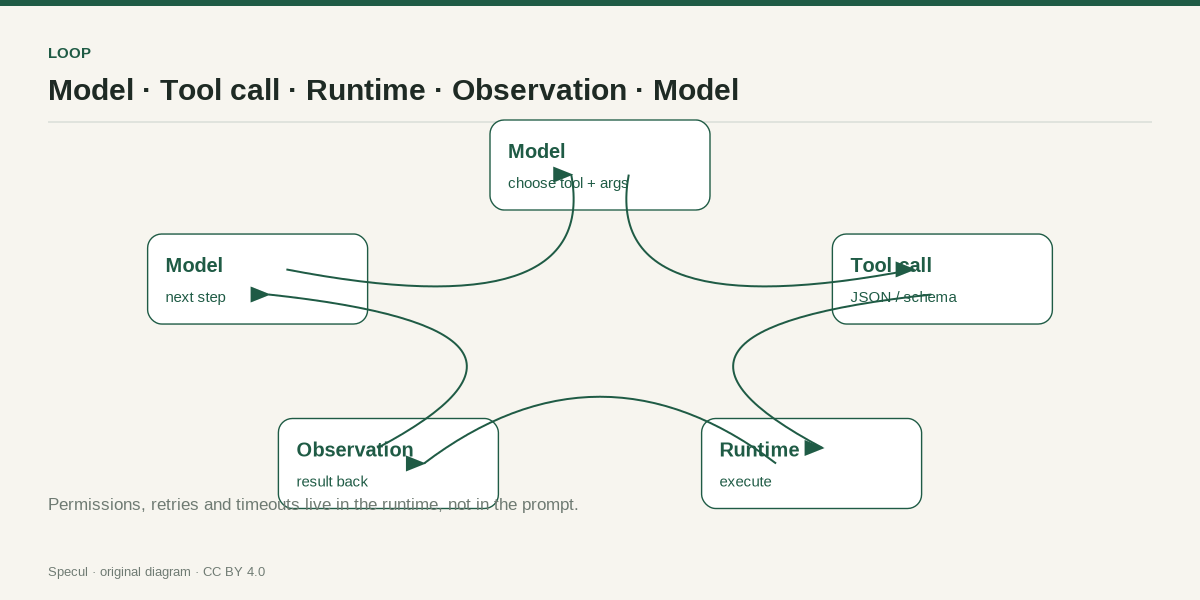
这是 Agent 能「真的做事」而不是「只是说要做」的分界线。没有它,模型只能空谈。It is what turns a language model into a usable assistant. It also introduces real risk: the model can act wrongly, not just speak wrongly.
把工具调用纳入验收清单Include tool calls in an acceptance checklist ↗
回到名词地图看第3段的其他 75 个词 →Back to the map: the other 75 terms in stage 3 →
别停在定义:去任务手册看按什么顺序做、验收什么;或者按你手头的任务,筛 3 个工具候选。Don’t stop at the definition: use the task handbook for the order and checks, or filter three tool candidates for the job at hand.
任务手册 →Task handbooks → · 按任务筛 3 个候选 →Filter three candidates →