位置编码Positional Encoding
Positional Encoding
解决什么问题What problem it solves
让模型知道每个词在句子里的先后顺序。Lets the model know the order of words in a sentence.
这是什么What it is
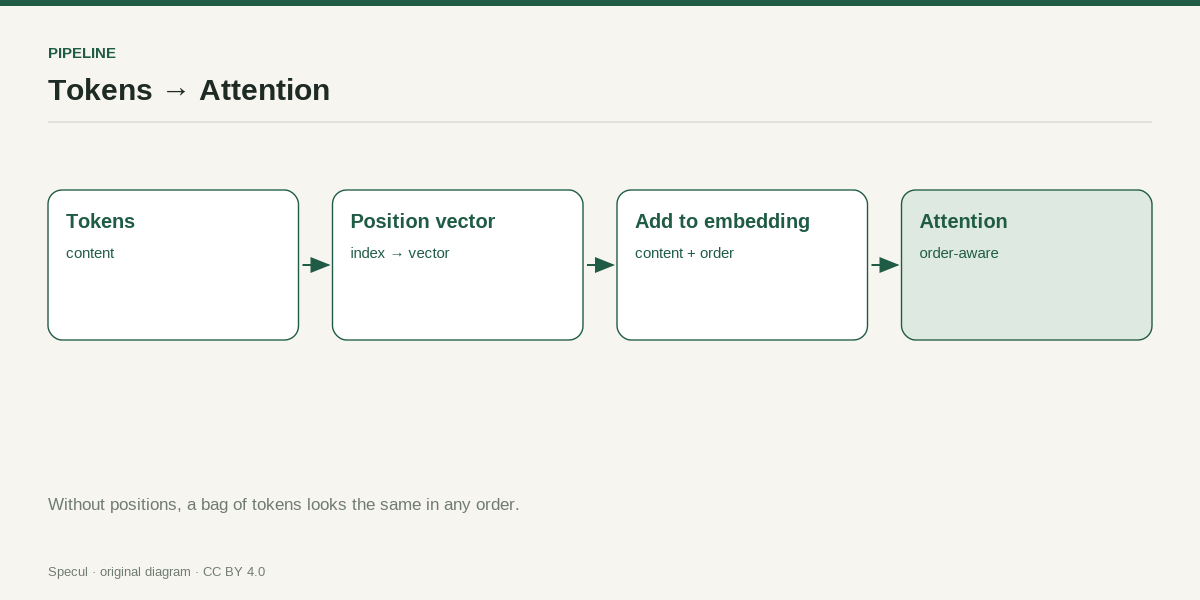
给每个位置附加一组数字,使模型能分辨「猫追狗」和「狗追猫」。
Attaching a set of numbers to each position so the model can tell "the cat chased the dog" from "the dog chased the cat".
为什么需要知道Why it matters
它解释了为什么上下文窗口超了之后,模型对长文的理解会明显退化。It explains why comprehension of long passages degrades noticeably once you exceed the context window.
同域词条Terms in the same area
现在能做什么What you can do now
回到名词地图看第4段的其他 60 个词 →Back to the map: the other 60 terms in stage 4 →
出处Sources
用这个术语做任务Use this term in a task
别停在定义:去任务手册看按什么顺序做、验收什么;或者按你手头的任务,筛 3 个工具候选。Don’t stop at the definition: use the task handbook for the order and checks, or filter three tool candidates for the job at hand.
任务手册 →Task handbooks → · 按任务筛 3 个候选 →Filter three candidates →