Loss Function
Loss Function
What problem it solves
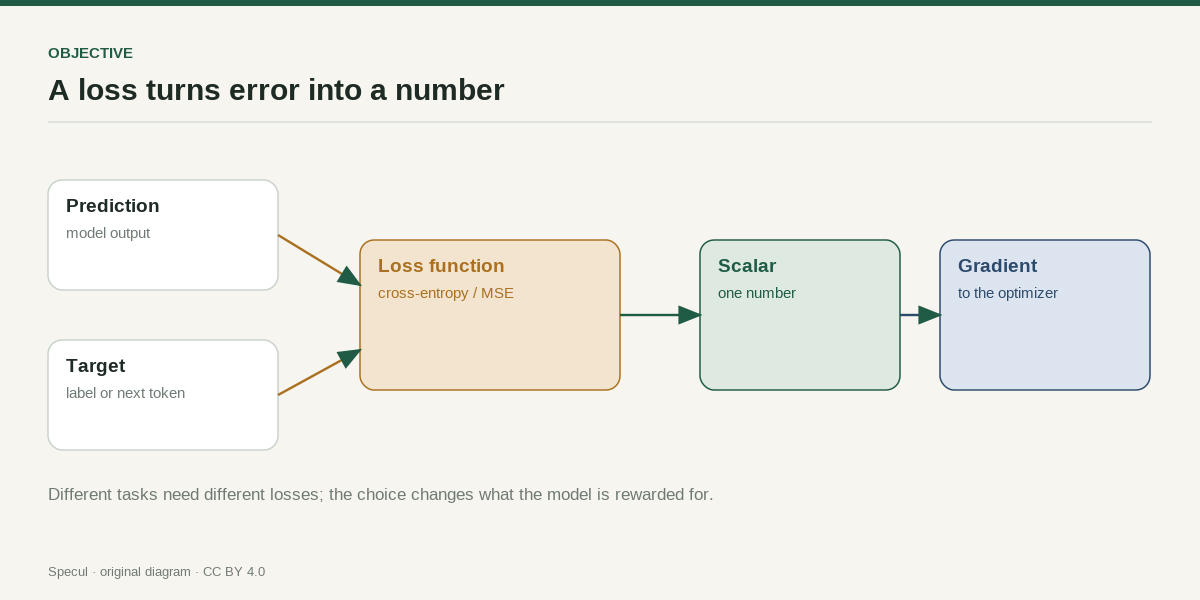
Turn “how wrong the prediction is” into a differentiable number; training minimises it.
What it is
Different tasks use different losses: cross-entropy for classification, mean squared error for regression, next-token cross-entropy for language models.
Loss design changes what the model prefers. It is not merely an optimisation trick.
Why it matters
Metrics and losses are not the same thing. A falling loss with a flat business metric is common.
Chinese aliases
Terms in the same area
What you can do now
Models atlas: which quantisations exist and which tier fits your VRAM ↗
Use this term in a task
Don’t stop at the definition: use the task handbook for the order and checks, or filter three tool candidates for the job at hand.